Showing posts with label ashtanga yoga. Show all posts

Tuesday, October 7, 2014

Did you know? Did you know that Sri K. Pattabhi Jois' famous instruction.

Did you know? Did you know that Sri K. Pattabhi Jois' famous instruction that "Practice and all is coming" is not always true with relation to Asana practice?

It is true in many cases indeed... and we have all experienced the evolution and growth in our physical bodies that come from DAILY PRACTICE. However there are many situations related to bone shape, bone length, and joint structure that will always prevent certain students from attaining certain Asanas. Any teacher who automatically suggests that more practice is definitely going to bring results in certain poses that are limited by joint and bone structure... is misguided.

Where the wisdom of "Practice and all is coming" is absolutely true is within the psychic and spiritual realms!
It can be said almost absolutely that our steady Sadhana (daily spiritual practice of Asana and Pranayama and Meditation)... with no days off... will bring huge results. These results tend to be in the direction of our evolution towards a more balanced mind and more peace in our heart and more clarity about the divine nature of THAT which is us.

And if as a result of your hard work and steady practice you are also one day able to get your leg behind your head for a few years of your life...then enjoy it!!! Doing intermediate poses and growing in strength and suppleness is a great goal...just not the end in and of itself. Verily, poses we attain will someday be taken away from us before we depart from this earth. But the fearlessness that comes from self-realization attained in meditation can never be taken.

Sunday, February 10, 2013

Salamadhi Ranch Teacher Training (coming up soon)

17 Day Teacher Training program beginning February 23rd! with Fred Busch and Rae Indigo


 A Life Transforming Program at Salamadhi Ranch! All Day Yoga and eating and hiking in Colorado! Tuition includes Room and Board! $3950

Would you like to escape to the mountains? Get away from the hectic pace of the city and sink into lush silence with a group of like-minded people? Salamadhi Ranch is the perfect location to elevate your yoga practice, detox your body and enjoy being enveloped by mountain landscapes. Stunning sunsets, a hot yoga studio, and the most flavorful vegetarian cuisine you can imagine. We are located only an hour outside of Denver, high in the beautiful Rocky Mountains!

With over 55 acres of hiking trails, Salamadhi Ranch offers unparalleled scenic vistas, fresh mountain air, and the best yoga instructors in North America. Our retreat programs span subjects such as yoga, meditation, plant-strong cooking classes and courses on nutrition, high-altitude elite-athlete training, pranayama, anatomy in yoga, and depending on the teacher in residence, music, energetic healing and other alternative disciplines are offered throughout the year.

Join the lucky few!

*If you are a Fred Busch 200 Graduate this program can deliver your 500 Hour Level with a few extra assignments!

Sunday, January 13, 2013

Did you know? - Attachment and Aversion

Did you know? Did you know that attachment and aversion are both obstacles?

Yes indeed it is not only the idea of being attached to things that is not encouraged on the spiritual path... also and equally important is the idea of non-aversion...not hating things, not having a negative energy field towards things.

Known as Raga (attachment) and Dvesha or Dvesa (aversion) in Sanskrit, both are an obstacle to the experience of freedom and power found in the divine present moment. They are emotional responses that negatively affect our ability to see the world around us clearly and without projection. This negative state is called avidya (non-seeing). In this state of non-seeing, pain is mistaken for pleasure, impermanence for permanence, and the profane for the sacred.
Both Attachment ans Aversion follow this pattern
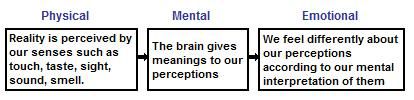
Attachments arise from imprinted memories of previous experiences of pleasure and happiness. Aversions originate from memories of previous experiences of pain and suffering. Over time, as we accumulate a long list of these likes and dislikes, our sense of self-identity is formed, and we begin defining ourselves as a collection of these ingrained emotional responses.

We tend to seek the pleasurable (perhaps even sub-consciously) and we slowly become attached, even to the point of addiction. We avoid the situations and things that remind us of our previous painful experiences and feel the need to protect ourselves from them. Aversion in the forms of fear and hatred are the results.

If we practice a form of meditative self-inquiry, and begin observing ourselves honestly and then reflecting on what we find, we can gradually increase our ability to understand ourselves. We start by becoming aware of our powerful likes and dislikes and how much we are controlled by them. Next, we become aware of the sources and triggers behind those tendencies. Over time, we are able to put a stop to the behaviors that seem to empower these obstacles, and as a result we liberate ourselves, opening ourselves up to new ways of observing and being in the world. Subsequently, we end the impulse to form our self-identity so heavily based on our emotional past. Additionally we are able to build a sense of self that radiates a deeper and more universal reflection of our indwelling spirit.


Monday, October 15, 2012

Did you know? Balance is basically strength!

Did you know? Did you know that there is not a magical skill called Balance?


Do you believe that you ‘don’t have good balance’? Fact is that there is no magical (or mythical) skill called balance that some people have and others don’t. Balance does not really exist in that way. What it is... is strength. Because you have the strength to do it is the reason why you are able to stand on leg, not because you were born with ‘good balance’. The best way to put it simply is: Balance = Strength and Strength is simply a function of practice. Guard against having unrealistic and unfair expectations of your body to perform poses that you have not practiced everyday for months. And of course keep your eyes fixed (or still) and keep breathing. ☺

Tuesday, October 2, 2012

Sun Salutation - Ashtanga Vinyasa Yoga (VIDEOS)

Since ancient times yogis taught that each of us replicates the entire universe, embodying stars, planets, rivers, seas, mountains, fields, the moon and the sun. Our outer sun, they asserted, is in reality a token of our own "inner sun," which corresponds to our subtle, or spiritual heart. Herein lies the seat of consciousness and higher wisdom (jnana) and, in some traditions, the domicile of the embodied self (jivatman).

Surya Namaskar, or Sun Salutation, is a common sequence of both hatha and ashtanga yoga asanas, practiced to warm-up the body at the beginning of yoga practice, whether in a class or at home. Embracing the ancient yogic tradition of prayer and prostration to the sun, this series (performed dynamically) pays homage to the life-giving power of our sun’s energy while preparing the body for subsequent asanas. There are many variations of Sun Salutation, which generally include 12 progressive poses. The Ashtanga Vinyasa primary series begins with Surya Namaskara “A” and “B” (or Sun Salutations A and B), which are traditionally repeated five times each. Surya Namaskara “A” consists of nine movements and Suyra Namaskara “B” consists of 17 movements, all in conjunction with the breath.

Sun Salutation strengthens and stretches the entire body, keeping the spine flexible while enhancing endurance, increasing energy, improving circulation and balancing the spirit. The following video is an introduction and brief tutorial on Sun Salutation “A”...


Sun Salutation “B” extends the flow of first sun salutation. As shown in the following video, the Sun Salutation “B” sequence is longer and includes additional standing postures such as Virabhadrasana I (Warrior I) and Utkatasana (Chair Pose)...


Both these video presentations of Sun Salutation as taught by Sri K. Pattabhi Jois in the Ashanga Vinyasa Yoga system are also taught in the Fred Busch Power Yoga Teacher Training.

For more on the subject of yoga, from beginner’s instruction to all levels of teacher training and certification visit the following sites...
www.fredbusch.com (Fred Busch's Website - Director of Teacher Training)
www.miamiyoga.com (Miami Yoga's Main Site)
www.brickellyoga.com (Brickell Hot Yoga Studio Site)
www.salamadhi.com (Fred's retreat center Colorado

Thursday, September 13, 2012

Did you know? There's a huge difference between western and yogic psychology (VIDEO)

Did you know? (Sourced from venerable guru Sri Swami Jyotirmayananda - spoken from his ashram in Miami, Florida - and thanks to Victoria Brunacci for taking me to his ashram recently).

“Did you know that western psychology is concerned with how to handle and deal with the mind? ...but the yoga psychology of Patanjali's Yoga sutras is concerned with how to transcend the mind? What a huge difference in approach! Both approaches may have value... but in my small opinion the yoga way of meditation is a very effective means of experiencing sustained peace of mind and well being!"


Now a bit more about Patanjali’s Yoga sutras (aka: Raja Yoga)

Starting off with the first two sutras of book 1 (loosely translated)...

Patanjali’s Yoga Sutras – Book 1 (the Problem of Union)

Sutra #1 - atha yogā 'nuśāsanaṃ - “Now, The following instruction concerns the Science of Union (or Yoga).”
Sutra #2 – yogaś citta vṛtti nirodhaḥ - “This Union (or Yoga) is achieved through the subjugation and the restraint of the chitta (‘stuff’ of the mind).”

Commentary on sutra #2 - Here Patanjali instructs the student to prevent the mind from assuming the many forms it so easily does, whereas western psychology analyses these ‘mind forms’ (chitta) in an attempt to determine the character and traits of the individual. Again, a huge difference!

When these mind forms are present and active in any given individual western psychologists then assess whether that person is in need of treatment or not, based on certain professional guidelines used to determine levels of “so-called” sanity. Problem is; these guidelines are also part of the same ‘mind stuff’. Whereas, in the case of yogic meditation as outlined in Patanjali’s sutras the mind forms are stilled and their very presence is transcended, when this happens it brings peace and the yogi knows himself as he is in reality.

Patanjali’s Yoga sutras are the basis of Ashtanga Yoga and aspiring yogis would do well to study them. Raja Yoga reveals the art and science of traditional Yoga meditation for Self-Realization. It is a scientific process of systematically encountering, examining, and transcending each of the various gross and subtle levels of false identity (ego) in the mind field, until the jewel of the true Self comes shining through and liberation is assured.

There are 196 sutras organized progressively in four books or chapters...

• Book 1 - Samadhi Pada, 51 sutras (concentration and meditation)
• Book 2 - Sadhana Pada, 55 sutras (practice)
• Book 3 - Vibhuti Pada, 56 sutras (progressing)
• Book 4 - Kaivalya Pada, 34 sutras (liberation)

For more on Patanjali’s Yoga sutras click on: Yoga Sutras of Patanjali - Raja Yoga - Ashtanga Yoga

Of realted interest (Video)...