Yoga Master Fred Busch shares his thoughts and wisdom on Health, Yoga, the Environment and Current Events. Fred is the founder of Miami Yoga and Brickell Hot Yoga in Florida, USA. FRED Busch is director of HOT POWER Yoga Teacher Training in studios in Miami, New York, Denver, London, Malta, Moscow, Lima, and Bogota. Power Yoga Teacher Trainings and retreats are also offered at FRED Busch's Salamadhi Ranch in Colorado's Rocky Mountains. www.fredbusch.com www.miamiyoga.com www.salamadhi.com
Showing posts with label Advanced Teacher Training. Show all posts
Monday, September 29, 2014
Sunday, September 28, 2014
You Can Join Sunday Morning Yoga With Fred Busch
Sunday morning yoga with Fred Busch, can you tell which one of these kids is doing his or her own thing? Yoga is what you make it, that's what makes yoga so amazing BE YOURSELF!
VinyasaYoga Mind,Body & Spirit
Health, Wellness, LivingNOW
LaTRicia "TR"
www.TRainWithTR.com
www.fredbusch.com
Tuesday, March 26, 2013
Why Study Patanjali’s Yoga Sutras?
An outline of their content and importance...
There are many paths claiming to lead to Self-realization, but one taught by Patanjali in his Yoga Sutras excels in the training of the mind. Step-by-step the mind is examined scientifically down to its subtlest detail until it reaches a point of understanding itself. This is accomplished through engaging gradual exercises which produce great powers of concentration, contemplation and meditation. The mind then, collected and focused to a degree hardly imaginable before, gathers all its inherent powers into one point and demonstrates mastery over the physical universe.
Additionally and in accord with the worlds principle spiritual teachings, Patanjali offers a training of the moral/ethical nature, as well, this so that powers attained through one-pointed focus of the mind are not misused at the expense of others. Ahimsa (non-injury) is the first principle in this training, and it’s an all-inclusive precept directed not only toward other sentient beings but also toward oneself.
The Essence of Patanjali’s Yoga Sutras (AKA; Raja Yoga)
In Sanskrit, Raja Yoga, literally means the kingly yoga, is the greatest contribution of Maharishi Patanjali. His descriptions of the levels of the mind often read like the most contemporary and enlightened schools of psychology. Just by reading the text the student will gain a certain clarity and objectivity in identifying the various processes of the mind.
Briefly, the four books (or chapters) of Patanjali’s Yoga Sutras encompass the following subjects:
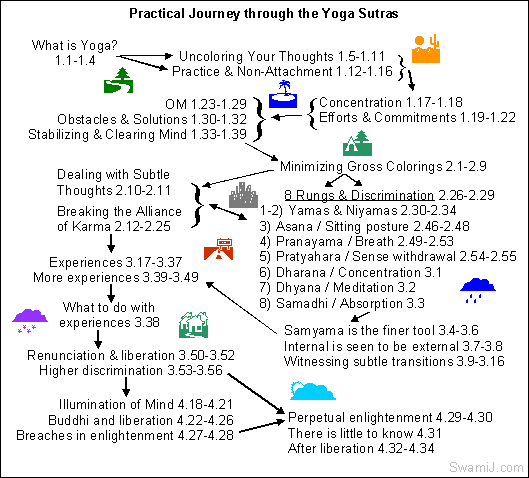
Book 1: Samadhi-Pada (Concentration) - Through various concentration and meditation practices, one may disentangle the mind from its constant “chattering”, removing obstacles and providing solutions, and the means to stabilize the mind. This chapter describes the different stages (or levels) of spiritual experiences available to the mind, as it ascends toward the attainment of the highest level of such experiences.
The 51 Sutras of Book 1 have been divided into 9 sections:
1. What is yoga? (1.1-1.4)
2. Witnessing and “Un-coloring” thoughts (interfering mental impressions) (1.5-1.11)
3. Practice and non-attachment (1.12-1.16)
4. Types of concentration (1.17-1.18)
5. Efforts and commitment (1.19-1.22)
6. Direct route through AUM (1.23-1.29)
7. Obstacles and solutions (1.30-1.32)
8. Stabilizing and clearing the mind (1.33-1.39)
9. Results of stabilizing the mind (1.40-1.51)
Book 2: Sadhana-Pada (Practices) - Chapter 2 outlines specific tools of attention that are used to systematically cut away the obstacles of the inner mental shield, obstacles that are blocking the light of the Self within. This includes the first 5 of the 8 rungs of yoga, known as Ashtanga yoga. Through proper training of the body and moral nature, one gradually purifies the personality of its idiosyncrasies so that it can become a vehicle capable of carrying the consciousness to higher and higher levels of spiritual experience.
The 55 sutras of Book 2 have been divided into 9 sections:
1. Minimizing gross coloring (2.1-2.9)
2. Dealing with subtle thoughts (2.10-2.11)
3. Breaking the alliance of karma (2.12-2.25)
4. The 8 rungs and discrimination (2.26-2.29)
5. Yamas and Niyamas, rungs #1 and 2 of 8 (2.30-2.34)
6. Benefits from Yamas and Niyamas (2.35-2.45)
7. Asana, rung #3 of 8 (2.46-2.48)
8. Pranayama, rung #4 of 8 (2.49-2.53)
9. Pratyahara, rung #5 of 8 (2.54-2.55)
Book 3: Vibhuti-Pada (Progressing) - Chapter 3 starts by presenting the last 3 of the 8 rungs of yoga, which are concentration, meditation, and samadhi, collectively known as samyama. The rest of the chapter explains how samyama is used as the finer tool to remove the subtler veils of ignorance. This constitutes the highest focusing power of the mind and the extraordinary supernormal powers which can be attained.
The 56 sutras of Book 3 have been divided into 9 sections:
1. Dharana, dhyana, and samadhi, rungs #6-8 of 8 (3.1-3.3)
2. Samyama is the finer tool (3.4-3.6)
3. Internal is seen to be external (3.7-3.8)
4. Witnessing subtle transitions (3.9-3.16)
5. Experiences from samyama (3.17-3.37)
6. What to do with experiences (3.38)
7. More from samyama (3.39-3.49)
8. Renunciation and liberation (3.50-3.52)
9. Higher discrimination (3.53-3.56)
Book 4: Kaivalya-Pada (Final Liberation) - Chapter 4 explains how the mind is constructed and veils the inner light of the Self. It describes how the yogi deals with the natural breaches in enlightenment, and how the primal building blocks of the mind resolve back into their cause, allowing final liberation. The ultimate goal of this Sutra is to experience the sublime state of complete freedom from the effects of the physical plane, while still living in the physical body.
The 34 sutras of Book 4 have been divided into 12 sections:
1. Means of attaining experience (4.1-4.3)
2. Emergence and mastery of mind (4.4-4.6)
3. Actions and karma (4.7-4.8)
4. Subconscious impressions (4.9-4.12)
5. Objects and the three gunas (4.13-4.14)
6. Mind perceiving objects (4.15-4.17)
7. Illumination of the mind (4.18-4.21)
8. Buddhi and liberation (4.22-4.26)
9. Breaches in enlightenment (4.27-4.28)
10. Perpetual enlightenment (4.29-4.30)
11. Knowables become few (4.31)
12. Gunas after liberation (4.32-4.34)
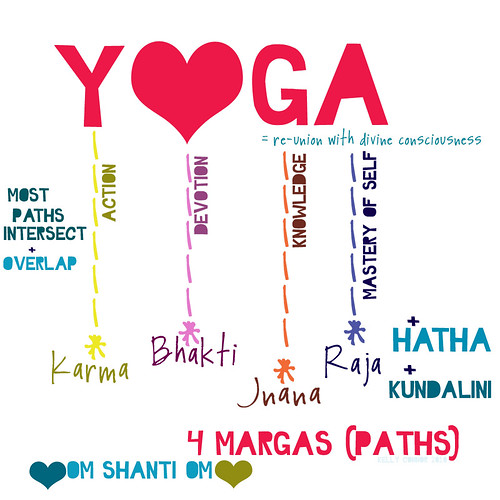
There are many paths or methods of attaining Yoga (Union with the Self). Five of the principle paths are:
1. Karma Yoga - The technique of remaining in touch with the spiritual worlds while engaged in the actions of daily life.
2. Jnana Yoga - Seeing and experiencing the light of the Spirit everywhere.
3. Bhakti Yoga - Devoted attention, service and love toward the One Life present everywhere.
4. Raja Yoga - Training of the mind to return to the pure and complete consciousness behind the intellectual and intuitive faculties.
5. Hatha Yoga - Training of the body and breathing processes, to achieve consciouness of the presence of Spirit in the cells of the physical body.
*Each individual Yoga student may be inclined by their temperament or abilities to emphasize one of these paths over the others, but they intermingle and overlap and, ideally, should all be present to some degree as limbs of a complete Yoga practice.
There are many paths claiming to lead to Self-realization, but one taught by Patanjali in his Yoga Sutras excels in the training of the mind. Step-by-step the mind is examined scientifically down to its subtlest detail until it reaches a point of understanding itself. This is accomplished through engaging gradual exercises which produce great powers of concentration, contemplation and meditation. The mind then, collected and focused to a degree hardly imaginable before, gathers all its inherent powers into one point and demonstrates mastery over the physical universe.
Additionally and in accord with the worlds principle spiritual teachings, Patanjali offers a training of the moral/ethical nature, as well, this so that powers attained through one-pointed focus of the mind are not misused at the expense of others. Ahimsa (non-injury) is the first principle in this training, and it’s an all-inclusive precept directed not only toward other sentient beings but also toward oneself.
The Essence of Patanjali’s Yoga Sutras (AKA; Raja Yoga)
In Sanskrit, Raja Yoga, literally means the kingly yoga, is the greatest contribution of Maharishi Patanjali. His descriptions of the levels of the mind often read like the most contemporary and enlightened schools of psychology. Just by reading the text the student will gain a certain clarity and objectivity in identifying the various processes of the mind.
Briefly, the four books (or chapters) of Patanjali’s Yoga Sutras encompass the following subjects:
Book 1: Samadhi-Pada (Concentration) - Through various concentration and meditation practices, one may disentangle the mind from its constant “chattering”, removing obstacles and providing solutions, and the means to stabilize the mind. This chapter describes the different stages (or levels) of spiritual experiences available to the mind, as it ascends toward the attainment of the highest level of such experiences.
The 51 Sutras of Book 1 have been divided into 9 sections:
1. What is yoga? (1.1-1.4)
2. Witnessing and “Un-coloring” thoughts (interfering mental impressions) (1.5-1.11)
3. Practice and non-attachment (1.12-1.16)
4. Types of concentration (1.17-1.18)
5. Efforts and commitment (1.19-1.22)
6. Direct route through AUM (1.23-1.29)
7. Obstacles and solutions (1.30-1.32)
8. Stabilizing and clearing the mind (1.33-1.39)
9. Results of stabilizing the mind (1.40-1.51)
Book 2: Sadhana-Pada (Practices) - Chapter 2 outlines specific tools of attention that are used to systematically cut away the obstacles of the inner mental shield, obstacles that are blocking the light of the Self within. This includes the first 5 of the 8 rungs of yoga, known as Ashtanga yoga. Through proper training of the body and moral nature, one gradually purifies the personality of its idiosyncrasies so that it can become a vehicle capable of carrying the consciousness to higher and higher levels of spiritual experience.
The 55 sutras of Book 2 have been divided into 9 sections:
1. Minimizing gross coloring (2.1-2.9)
2. Dealing with subtle thoughts (2.10-2.11)
3. Breaking the alliance of karma (2.12-2.25)
4. The 8 rungs and discrimination (2.26-2.29)
5. Yamas and Niyamas, rungs #1 and 2 of 8 (2.30-2.34)
6. Benefits from Yamas and Niyamas (2.35-2.45)
7. Asana, rung #3 of 8 (2.46-2.48)
8. Pranayama, rung #4 of 8 (2.49-2.53)
9. Pratyahara, rung #5 of 8 (2.54-2.55)
Book 3: Vibhuti-Pada (Progressing) - Chapter 3 starts by presenting the last 3 of the 8 rungs of yoga, which are concentration, meditation, and samadhi, collectively known as samyama. The rest of the chapter explains how samyama is used as the finer tool to remove the subtler veils of ignorance. This constitutes the highest focusing power of the mind and the extraordinary supernormal powers which can be attained.
The 56 sutras of Book 3 have been divided into 9 sections:
1. Dharana, dhyana, and samadhi, rungs #6-8 of 8 (3.1-3.3)
2. Samyama is the finer tool (3.4-3.6)
3. Internal is seen to be external (3.7-3.8)
4. Witnessing subtle transitions (3.9-3.16)
5. Experiences from samyama (3.17-3.37)
6. What to do with experiences (3.38)
7. More from samyama (3.39-3.49)
8. Renunciation and liberation (3.50-3.52)
9. Higher discrimination (3.53-3.56)
Book 4: Kaivalya-Pada (Final Liberation) - Chapter 4 explains how the mind is constructed and veils the inner light of the Self. It describes how the yogi deals with the natural breaches in enlightenment, and how the primal building blocks of the mind resolve back into their cause, allowing final liberation. The ultimate goal of this Sutra is to experience the sublime state of complete freedom from the effects of the physical plane, while still living in the physical body.
The 34 sutras of Book 4 have been divided into 12 sections:
1. Means of attaining experience (4.1-4.3)
2. Emergence and mastery of mind (4.4-4.6)
3. Actions and karma (4.7-4.8)
4. Subconscious impressions (4.9-4.12)
5. Objects and the three gunas (4.13-4.14)
6. Mind perceiving objects (4.15-4.17)
7. Illumination of the mind (4.18-4.21)
8. Buddhi and liberation (4.22-4.26)
9. Breaches in enlightenment (4.27-4.28)
10. Perpetual enlightenment (4.29-4.30)
11. Knowables become few (4.31)
12. Gunas after liberation (4.32-4.34)
There are many paths or methods of attaining Yoga (Union with the Self). Five of the principle paths are:
1. Karma Yoga - The technique of remaining in touch with the spiritual worlds while engaged in the actions of daily life.
2. Jnana Yoga - Seeing and experiencing the light of the Spirit everywhere.
3. Bhakti Yoga - Devoted attention, service and love toward the One Life present everywhere.
4. Raja Yoga - Training of the mind to return to the pure and complete consciousness behind the intellectual and intuitive faculties.
5. Hatha Yoga - Training of the body and breathing processes, to achieve consciouness of the presence of Spirit in the cells of the physical body.
*Each individual Yoga student may be inclined by their temperament or abilities to emphasize one of these paths over the others, but they intermingle and overlap and, ideally, should all be present to some degree as limbs of a complete Yoga practice.
Thursday, January 24, 2013
Equanimity...
“Yesterday i slipped down the stairs and landed without injury... also yesterday my foot slipped while walking indoors and I almost fell badly but managed to stay on my feet.
I learn two things from these events. One is that at any moment...at any time ...it could be our time to die and that life is precious and not to be taken for granted.
Also reinforced is how Yoga and my Asana and meditation practices are so beneficial in my everyday life. I remember falling my foot sliding off that stair and being very relaxed and ready.
The physical dexterity and mental equanimity that Yoga gives us is invaluable in tough moments.”...Fred Busch
*Commentary on Fred’s experience...”Equanimity” (upekṣhā) is mentioned in Patañjali's Yoga Sutras (Raja Yoga - 1.33[2]), as one of the four sublime attitudes, along with “loving-kindness” (maitri), “compassion” (karuṇā), and “joy” (mudita). This list is identical to the four immeasurables in Buddhist literature. These are the qualities of true, authentic, and unconditional love. Both Patañjali, the Indian sage who compiled the Yoga Sutras in the second century BCE, and the Buddha taught the importance of cultivating these four states of mind.
I learn two things from these events. One is that at any moment...at any time ...it could be our time to die and that life is precious and not to be taken for granted.
Also reinforced is how Yoga and my Asana and meditation practices are so beneficial in my everyday life. I remember falling my foot sliding off that stair and being very relaxed and ready.
The physical dexterity and mental equanimity that Yoga gives us is invaluable in tough moments.”...Fred Busch
*Commentary on Fred’s experience...”Equanimity” (upekṣhā) is mentioned in Patañjali's Yoga Sutras (Raja Yoga - 1.33[2]), as one of the four sublime attitudes, along with “loving-kindness” (maitri), “compassion” (karuṇā), and “joy” (mudita). This list is identical to the four immeasurables in Buddhist literature. These are the qualities of true, authentic, and unconditional love. Both Patañjali, the Indian sage who compiled the Yoga Sutras in the second century BCE, and the Buddha taught the importance of cultivating these four states of mind.
Sunday, January 13, 2013
Did you know? - Attachment and Aversion
Did you know? Did you know that attachment and aversion are both obstacles?
Yes indeed it is not only the idea of being attached to things that is not encouraged on the spiritual path... also and equally important is the idea of non-aversion...not hating things, not having a negative energy field towards things.
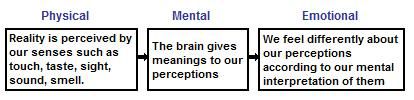
Known as Raga (attachment) and Dvesha or Dvesa (aversion) in Sanskrit, both are an obstacle to the experience of freedom and power found in the divine present moment. They are emotional responses that negatively affect our ability to see the world around us clearly and without projection. This negative state is called avidya (non-seeing). In this state of non-seeing, pain is mistaken for pleasure, impermanence for permanence, and the profane for the sacred.
Attachments arise from imprinted memories of previous experiences of pleasure and happiness. Aversions originate from memories of previous experiences of pain and suffering. Over time, as we accumulate a long list of these likes and dislikes, our sense of self-identity is formed, and we begin defining ourselves as a collection of these ingrained emotional responses.
We tend to seek the pleasurable (perhaps even sub-consciously) and we slowly become attached, even to the point of addiction. We avoid the situations and things that remind us of our previous painful experiences and feel the need to protect ourselves from them. Aversion in the forms of fear and hatred are the results.
If we practice a form of meditative self-inquiry, and begin observing ourselves honestly and then reflecting on what we find, we can gradually increase our ability to understand ourselves. We start by becoming aware of our powerful likes and dislikes and how much we are controlled by them. Next, we become aware of the sources and triggers behind those tendencies. Over time, we are able to put a stop to the behaviors that seem to empower these obstacles, and as a result we liberate ourselves, opening ourselves up to new ways of observing and being in the world. Subsequently, we end the impulse to form our self-identity so heavily based on our emotional past. Additionally we are able to build a sense of self that radiates a deeper and more universal reflection of our indwelling spirit.
Yes indeed it is not only the idea of being attached to things that is not encouraged on the spiritual path... also and equally important is the idea of non-aversion...not hating things, not having a negative energy field towards things.
Known as Raga (attachment) and Dvesha or Dvesa (aversion) in Sanskrit, both are an obstacle to the experience of freedom and power found in the divine present moment. They are emotional responses that negatively affect our ability to see the world around us clearly and without projection. This negative state is called avidya (non-seeing). In this state of non-seeing, pain is mistaken for pleasure, impermanence for permanence, and the profane for the sacred.
| Both Attachment ans Aversion follow this pattern |
We tend to seek the pleasurable (perhaps even sub-consciously) and we slowly become attached, even to the point of addiction. We avoid the situations and things that remind us of our previous painful experiences and feel the need to protect ourselves from them. Aversion in the forms of fear and hatred are the results.
If we practice a form of meditative self-inquiry, and begin observing ourselves honestly and then reflecting on what we find, we can gradually increase our ability to understand ourselves. We start by becoming aware of our powerful likes and dislikes and how much we are controlled by them. Next, we become aware of the sources and triggers behind those tendencies. Over time, we are able to put a stop to the behaviors that seem to empower these obstacles, and as a result we liberate ourselves, opening ourselves up to new ways of observing and being in the world. Subsequently, we end the impulse to form our self-identity so heavily based on our emotional past. Additionally we are able to build a sense of self that radiates a deeper and more universal reflection of our indwelling spirit.
Tuesday, December 18, 2012
"Hunzas" - the Longest Lived People (Video)
In the early 70s, National Geographic ran an extensive series of articles investigating claims of long-lived people around the world. The Hunza (pronounced hoonza”) People, who live in the North of Pakistan, were one of those peoples. It is believed that among these people centenarians are a common occurrence. The Hunza and the valley in which they live was famous in the region. The Hunza Valley is a high altitude, fertile valley that supports agriculture and provides isolation from the rest of the world. Some say that the Hunza Valley was the basis for Shangri La in the book “Lost Horizons”.
No one really knows exactly how long they live because it has never been documented and they did not measure the quality of their lives in years. Physicians examined the Hunza and made their best guesses to how old they people were. Without focusing too much on documented maximum age, the truly extraordinary fact is that all reports from the Hunza mention that even the most elderly population is fit, full of vitality and virtually free from disease.
How did they remain disease free, you might ask?
In short, diet, exercise and proper attitude. The mountain terrain where the Hunza live is extremely rough and the Hunza people spend their lives moving among the rough passages and steep ridges. They are said to be hardier than even the famous Sherpa people of the Himalayan region.
How and what do they eat?
Hunzas eat only two meals a day and eat very little. The first meal is taken about noon, although the Hunzas are up every morning at around five a.m. This may sound surprising, since most nutrition experts here in the west stress the importance of a hearty breakfast, even though our life-style is relatively sedentary compared to that of the Hunzas; who engage in demanding physical labor all morning long on an empty stomach.
Their primary died consists of mostly plants, eaten raw. The Hunza do not have access to a large amount of fuel for cooking, nor are there many animals available for eating, so they plant what they can and gather the rest. Apricots (they have a particular fondness for apricot pits), cherries, grapes, plums and peaches are all cultivated by the Hunza. They also eat a lot of grains such as wheat, barley, and millet. During the off season (the cold winter months) milk and cheese are important sources of animal protein. Meat, although not completely eliminated, is consumed only very rarely, reserved for special occasions like marriages or festivals. This fact is no doubt one of the reasons why the Hunzas have such healthy digestive systems. Even when meat is served, the portions are very small and are generally cut into small pieces and stewed for a long time. Beef and mutton are rarely used, chicken being their most common source of animal protein. The important thing to remember is that although the Hunzas are not wholly vegetarian, meat forms a minimal part of their daily diet. In addition, all Hunza food is completely natural, containing no chemical additives whatsoever.
And their attitude, where they happy?
Absolutely. In fact, many researchers have claimed that they’re "The Happiest People on Earth". The Hunza have a certain relish and passion for life -- perhaps brought on to some extent by their daily rigorous exercise and simple lifestyle.
What Can We Learn from the Hunza?
Three things:
| Hunza valley - terraced gardens |
What Can We Learn from the Hunza?
- Eat primarily raw fruits and vegetables
- Exercise daily
- Maintain a positive outlook
Monday, December 10, 2012
Sanskrit Pronunciation Guide W/Fred Busch - Chapters 11 & 12 (VIDEO)
Completing this series of how to learn to pronounce the most common Yoga Asanas correctly. Learn many Sanskrit root words that can be used to understand more Mantras and sacred texts. These videos were shot live at Fred Busch Power Yoga Teacher Training in South America.
Chapter 11 of 12
Chapter 12 of 12
Check out the other chapters...
For Chapters 1 & 2 click HERE
For Chapters 3 & 4 click HERE
For Chapters 5 & 6 click HERE
For Chapters 7 & 8 click HERE
For Chapters 9 & 10 click HERE
Chapter 11 of 12
Chapter 12 of 12
Check out the other chapters...
For Chapters 1 & 2 click HERE
For Chapters 3 & 4 click HERE
For Chapters 5 & 6 click HERE
For Chapters 7 & 8 click HERE
For Chapters 9 & 10 click HERE
Monday, December 3, 2012
Sanskrit Pronunciation Guide W/Fred Busch - Chapters 9 & 10 (VIDEO)
Continuing with this series of how to learn to pronounce the most common Yoga Asanas correctly. Learn many Sanskrit root words that can be used to understand more Mantras and sacred texts. These videos were shot live at Fred Busch Power Yoga Teacher Training in South America.
Chapter 9 of 12
Chapter 10 of 12
Stay tuned, more to come...
For Chapters 1 & 2 click HERE
For Chapters 3 & 4 click HERE
For Chapters 5 & 6 click HERE
For Chapters 7 & 8 click HERE
Chapter 9 of 12
Chapter 10 of 12
Stay tuned, more to come...
For Chapters 1 & 2 click HERE
For Chapters 3 & 4 click HERE
For Chapters 5 & 6 click HERE
For Chapters 7 & 8 click HERE
Monday, November 26, 2012
Sanskrit Pronunciation Guide W/Fred Busch - Chapters 7 & 8 (VIDEO)
Continuing with this series of how to learn to pronounce the most common Yoga Asanas correctly. Learn many Sanskrit root words that can be used to understand more Mantras and sacred texts. These videos were shot live at Fred Busch Power Yoga Teacher Training in South America.
Chapter 7 of 12
Chapter 8 of 12
Stay tuned, more to come...
For Chapters 1 & 2 click HERE
For Chapters 3 & 4 click HERE
For Chapters 5 & 6 click HERE
Chapter 7 of 12
Chapter 8 of 12
Stay tuned, more to come...
For Chapters 1 & 2 click HERE
For Chapters 3 & 4 click HERE
For Chapters 5 & 6 click HERE
Monday, November 19, 2012
Sanskrit Pronunciation Guide W/Fred Busch - Chapters 5 & 6 (VIDEO)
Continuing with this series of how to learn to pronounce the most common Yoga Asanas correctly. Learn many Sanskrit root words that can be used to understand more Mantras and sacred texts. These videos were shot live at Fred Busch Power Yoga Teacher Training in South America.
Chapter 5 of 12
Chapter 6 0f 12
Stay tuned, more to come...
For Chapters 1 & 2 click HERE
For Chapters 3 & 4 click HERE
Chapter 5 of 12
Chapter 6 0f 12
Stay tuned, more to come...
For Chapters 1 & 2 click HERE
For Chapters 3 & 4 click HERE
Tuesday, October 30, 2012
Sanskrit Pronunciation Guide W/Fred Busch - Chapters 3 & 4 (VIDEO)
Continue to learn how to pronounce the most common Yoga Asanas correctly. Learn many Sanskrit root words that can be used to understand more Mantras and sacred texts. These videos were shot live at Fred Busch Power Yoga Teacher Training in South America.
Chapter 3 of 12
Chapter 4 of 12
For Chapters 1 & 2 click HERE
Stay tuned, more to come...
Chapter 3 of 12
Chapter 4 of 12
For Chapters 1 & 2 click HERE
Stay tuned, more to come...
Monday, October 29, 2012
Sanskrit Pronunciation Guide W/Fred Busch - Chapters 1 & 2 (VIDEO)
Learn how to pronounce the most common Yoga Asanas correctly. Learn many Sanskrit root words that can be used to understand more Mantras and sacred texts. These videos were shot live at Fred Busch Power Yoga Teacher Training in South America.
Chapter 1 of 12
Chapter 1 of 12
Chapter 2 of 12
Stay tuned for more...
Yoga Retreat in Rishikesh, INDIA with FRED BUSCH and NATALIE D'ONOFRIO
NAMASTE! We hope you all have a wonderful holiday season. We have had a date change for our INDIA YOGA RETREAT now 12/10/2012-12/20/2012. Which means you have even more time to prepare, plan, save and COME with us. You don't want to miss this life changing experience led by Fred, Natalie and our dear friend Amit. Check out our blog from our last retreat to see highlights, photos, videos, and stories; http://therupeeman.tumblr.com
10 DAYS OF BLISS IN RISHIKESH, INDIA. Come see the HIMALAYAS!
Dates Decem...ber 10th- December 20th 2012. Plenty of time for you to plan though we do plan on selling out.
Brief Details:
12/10/2012 arrive in Delhi, India
12/11/2012 depart to Rishikesh by private car
12/11/2012-12/19/2012 Check into hotel in The Rainforest House (www.rainforest-house.com) You will experience daily yoga, visit to waterfalls, the Ganga River, Shivanada ashram, Vasishta Gufta cave where the Hindu sage and yogi Vasishta did his sadhana ages ago, Rajaji National Park, sunrises, sunsets, hikes, and a life changing experience.
12/19/2012 depart back Delhi, India by private car
12/20/2012 departure back to country of origin.
Price: $2250. We have extended our discounted price: pay in full by JULY 1st 2012 and pay $2000.
Includes: pick up to and from airport, 9 nights of hotels (double occupancy and shared bed), breakfast included in Delhi, 2 meals a day included in Rishikesh at the rainforest hotel, daily yoga classes, and group day adventures.
Does not include: tips, meals other then what is stated, any extra activities you may want to do while in Rishikesh, and international air flight.
To reserve your spot Contact:
Fred Busch fbusch911@gmail.com
Natalie D'onofrio therupeeman@gmail.com
10 DAYS OF BLISS IN RISHIKESH, INDIA. Come see the HIMALAYAS!
| Rishikesh - aerial view |
Brief Details:
12/10/2012 arrive in Delhi, India
12/11/2012 depart to Rishikesh by private car
12/11/2012-12/19/2012 Check into hotel in The Rainforest House (www.rainforest-house.com) You will experience daily yoga, visit to waterfalls, the Ganga River, Shivanada ashram, Vasishta Gufta cave where the Hindu sage and yogi Vasishta did his sadhana ages ago, Rajaji National Park, sunrises, sunsets, hikes, and a life changing experience.
12/19/2012 depart back Delhi, India by private car
12/20/2012 departure back to country of origin.
Price: $2250. We have extended our discounted price: pay in full by JULY 1st 2012 and pay $2000.
Includes: pick up to and from airport, 9 nights of hotels (double occupancy and shared bed), breakfast included in Delhi, 2 meals a day included in Rishikesh at the rainforest hotel, daily yoga classes, and group day adventures.
Does not include: tips, meals other then what is stated, any extra activities you may want to do while in Rishikesh, and international air flight.
To reserve your spot Contact:
Fred Busch fbusch911@gmail.com
Natalie D'onofrio therupeeman@gmail.com
Friday, October 19, 2012
Yoga in your workspace with Fred Busch - Part 1 (VIDEO)
Yoga in your workspace - at your desk! The most important thing you can do at your job is to micro-exercise. Take small breaks to stretch and strengthen your muscles. This keeps your mind clear and your body feeling energized. In this short video Fred demonstrates how to use Yoga awareness at work during a short 5 minute break.
Stay tuned for Part 2, coming soon...
For more info about Fred Busch Retreats and Teacher Trainings visit http://www.fredbusch.com/
Monday, October 15, 2012
Mammograms - Are they Safe? Why all the hype?
"Schedule your mammogram during MAMMOPALOOZA and enter to win an Apple® iPad® 2."
This is an ad I just saw. Is it not odd to anyone else that rather than addressing the root cause of breast cancer and eradicating it... we prefer to have a MAMMOPALOOZA.

Read what Dr. Andrew Weil has to say in this Q & A...
http://www.drweil.com/drw/u/QAA400672/Mammograms-Too-Much-Radiation.html
AND, this from Dr. Mercola, click on: Your Greatest Weapon Against Breast Cancer (Not Mammograms)
This is an ad I just saw. Is it not odd to anyone else that rather than addressing the root cause of breast cancer and eradicating it... we prefer to have a MAMMOPALOOZA.
Read what Dr. Andrew Weil has to say in this Q & A...
http://www.drweil.com/drw/u/QAA400672/Mammograms-Too-Much-Radiation.html
AND, this from Dr. Mercola, click on: Your Greatest Weapon Against Breast Cancer (Not Mammograms)
Wednesday, October 10, 2012
In the "Hood" at Salamadhi Ranch
The deck of Salamadhi Ranch on an amazing Colorado morning! What a cool Hoodie!

More Photos from the Salamadhi Ranch retreat click HERE

More Photos from the Salamadhi Ranch retreat click HERE
Obesity not a problem? - Think Again...
So you think taxing garbage foods is a bad idea huh? Obesity in this country is not affecting your health care costs huh?
Radical action may be required action to stop this epidemic according to global health experts!
Obesity is a problem in low, middle and high income countries
From the article: "Governments had been too slow to act on the 'obesity crisis'."
"There is more willingness to invest in drugs and surgery than dealing with the underlying causes."
Author Nick Triggle also compared the tactics of the food industry - in terms of getting peopl...e addicted to their products and in blocking attempts to discourage consumption - to those of tobacco firms in previous decades.' - the FAT tax is coming.
Read more: http://www.bbc.co.uk/news/health-14669203
Radical action may be required action to stop this epidemic according to global health experts!
Obesity is a problem in low, middle and high income countries
| Obesity is a problem in low, middle and high income countries |
"There is more willingness to invest in drugs and surgery than dealing with the underlying causes."
Author Nick Triggle also compared the tactics of the food industry - in terms of getting peopl...e addicted to their products and in blocking attempts to discourage consumption - to those of tobacco firms in previous decades.' - the FAT tax is coming.
Read more: http://www.bbc.co.uk/news/health-14669203
ANNOUNCEMENT...Spots Still Open for Teacher Training at Yoga-nanda in New York!
ANNOUNCEMENT...
Fred just booked his flight to New York! Saturday starts the Teacher Training at Yoga-nanda in New York! There are still some spots!
Details...
When: October 13 at 9:00 am until November 11 at 5:30pm. Fred Busch Power Yoga Teacher Training at Yoga Nanda in Garden City! Yoga Alliance 200/300/500. Hot Yoga / Power Yoga / Vinyasa.

For all information and to register please visit: http://www.yoga-nanda.com/
or email fredb@miamiyoga.com
Fred just booked his flight to New York! Saturday starts the Teacher Training at Yoga-nanda in New York! There are still some spots!
Details...
When: October 13 at 9:00 am until November 11 at 5:30pm. Fred Busch Power Yoga Teacher Training at Yoga Nanda in Garden City! Yoga Alliance 200/300/500. Hot Yoga / Power Yoga / Vinyasa.
For all information and to register please visit: http://www.yoga-nanda.com/
or email fredb@miamiyoga.com
Did you know? - The Greatest trick of the Devil...
Did you know that 'the greatest trick the devil ever played is convincing the world he does not exist?' This means that if we are not aware of the source of the problem it is not possible to address the issue. If you are convinced that the source of the issue does not even exist...then you are unlikely to cast responsibility in the right direction.
And equally as important ...is the realization that until something does indeed have a name... it can not be targeted. This is the reason why all things are now called medical conditions with specific medical names. Once a specific medical name is given to a specific medical condition... even in the cases of things that are totally innocuous... then the pharmaceutical industry can market a chemical that 'targets' that condition. It is a big industry of naming conditions so they can be used to create multi billion dollar drugs to counteract conditions that are more easily and effectively remedied using other means.
These two metaphors in juxtaposition are a tremendous wisdom helpful for navigating the world.
Always keep in mind: The biggest lie that the devil is selling the world is that he doesn’t exist. After that the devil's working on helping you to lose faith in love, in the power of work and the belief in that you can be healthy, happy and whole.
And equally as important ...is the realization that until something does indeed have a name... it can not be targeted. This is the reason why all things are now called medical conditions with specific medical names. Once a specific medical name is given to a specific medical condition... even in the cases of things that are totally innocuous... then the pharmaceutical industry can market a chemical that 'targets' that condition. It is a big industry of naming conditions so they can be used to create multi billion dollar drugs to counteract conditions that are more easily and effectively remedied using other means.
These two metaphors in juxtaposition are a tremendous wisdom helpful for navigating the world.
Always keep in mind: The biggest lie that the devil is selling the world is that he doesn’t exist. After that the devil's working on helping you to lose faith in love, in the power of work and the belief in that you can be healthy, happy and whole.
| Don't be deceived |
Monday, October 8, 2012
Ahimsa and Yoga Samadhi (VIDEO)
In the video that follows, Fred Busch explains during his power yoga teacher training in Miami Beach, how a person cannot fully understand the power and truth of Ahimsa until after they have attained Samadhi. The very first Yama, which is the first limb, is not possible to realize until after enlightenment.
First a brief explanation...

Ahimsa (Compassion for all living things)
The word ahimsa literally means not to injure or show cruelty to any creature or any person in any way whatsoever. Ahimsa is, however, more than just lack of violence as adapted in yoga. It means kindness, friendliness, and thoughtful consideration of other people and things. It also has to do with our duties and responsibilities too. Ahimsa implies that in every situation we should adopt a considerate attitude and do no harm.

Samadhi (Union with the Divine)
The final step in the eight-fold path of Yoga is the attainment of Samadhi. Samadhi means "to bring together, to merge." In the state of samadhi the body and senses are at rest, as if asleep, yet the faculty of mind and reason are alert, as if awake; one goes beyond consciousness. During samadhi, we realize what it is to be an identity without differences, and how a liberated soul can enjoy pure awareness of this pure identity. The conscious mind drops back into that unconscious oblivion from which it first emerged.
Thus, samadhi refers to union or true Yoga. There is an ending to the separation that is created by the "I" and "mine" of our illusory perceptions of reality. The mind does not distinguish between self and non-self, or between the object contemplated and the process of contemplation. The mind and the intellect have stopped and there is only the experience of consciousness, truth and unutterable joy.
The achievement of samadhi is a difficult task. For this reason the Yoga Sutra suggests the practice of asanas and pranayama as preparation for dharana (Concentration and cultivating inner perceptual awareness), because these influence mental activities and create space in the crowded schedule of the mind. Once dharana has occurred, dhyana (Meditation) and samadhi can follow.
These eight limbs (steps) of yoga indicate a logical pathway that leads to the attainment of physical, ethical, emotional, and psycho-spiritual health. Yoga does not seek to change the individual; rather, it allows the natural state of total health and integration in each of us to become a reality.
First a brief explanation...
Ahimsa (Compassion for all living things)
The word ahimsa literally means not to injure or show cruelty to any creature or any person in any way whatsoever. Ahimsa is, however, more than just lack of violence as adapted in yoga. It means kindness, friendliness, and thoughtful consideration of other people and things. It also has to do with our duties and responsibilities too. Ahimsa implies that in every situation we should adopt a considerate attitude and do no harm.
Samadhi (Union with the Divine)
The final step in the eight-fold path of Yoga is the attainment of Samadhi. Samadhi means "to bring together, to merge." In the state of samadhi the body and senses are at rest, as if asleep, yet the faculty of mind and reason are alert, as if awake; one goes beyond consciousness. During samadhi, we realize what it is to be an identity without differences, and how a liberated soul can enjoy pure awareness of this pure identity. The conscious mind drops back into that unconscious oblivion from which it first emerged.
Thus, samadhi refers to union or true Yoga. There is an ending to the separation that is created by the "I" and "mine" of our illusory perceptions of reality. The mind does not distinguish between self and non-self, or between the object contemplated and the process of contemplation. The mind and the intellect have stopped and there is only the experience of consciousness, truth and unutterable joy.
The achievement of samadhi is a difficult task. For this reason the Yoga Sutra suggests the practice of asanas and pranayama as preparation for dharana (Concentration and cultivating inner perceptual awareness), because these influence mental activities and create space in the crowded schedule of the mind. Once dharana has occurred, dhyana (Meditation) and samadhi can follow.
These eight limbs (steps) of yoga indicate a logical pathway that leads to the attainment of physical, ethical, emotional, and psycho-spiritual health. Yoga does not seek to change the individual; rather, it allows the natural state of total health and integration in each of us to become a reality.
Subscribe to:
Posts (Atom)