Yoga Master Fred Busch shares his thoughts and wisdom on Health, Yoga, the Environment and Current Events.
Fred is the founder of Miami Yoga and Brickell Hot Yoga in Florida, USA.
FRED Busch is director of HOT POWER Yoga Teacher Training in studios in Miami, New York, Denver, London, Malta, Moscow, Lima, and Bogota. Power Yoga Teacher Trainings and retreats are also offered at FRED Busch's Salamadhi Ranch in Colorado's Rocky Mountains.
www.fredbusch.com
www.miamiyoga.com
www.salamadhi.com
FRED BUSCH EUROPEAN 200 HOUR 3 WEEK POWER YOGA TEACHER TRAINING
Become a qualified YOGA teacher and embrace the YOGA lifestyle with Yoga Healing Sequences
The Fred Busch FOOD 101 'You are what You eat'
YOGA Teacher Massage Therapy
Location Malta
Within 3+ hours from all European Centers
300 days of sunshine per y ear for indoor and outdoor YOGA
A variety of affordable accommodations in the Mediterranean setting
REGISTER NOW: fredbusch@gmail.com
+356 3550 5539
The 3 week program is taught by Rae Indigo and Fred Busch
In the early 70s, National Geographic ran an extensive series of articles investigating claims of long-lived people around the world. The Hunza (pronounced hoonza”) People, who live in the North of Pakistan, were one of those peoples. It is believed that among these people centenarians are a common occurrence. The Hunza and the valley in which they live was famous in the region. The Hunza Valley is a high altitude, fertile valley that supports agriculture and provides isolation from the rest of the world. Some say that the Hunza Valley was the basis for Shangri La in the book “Lost Horizons”.
Hunza valley - terraced gardens
No one really knows exactly how long they live because it has never been documented and they did not measure the quality of their lives in years. Physicians examined the Hunza and made their best guesses to how old they people were. Without focusing too much on documented maximum age, the truly extraordinary fact is that all reports from the Hunza mention that even the most elderly population is fit, full of vitality and virtually free from disease.
How did they remain disease free, you might ask?
In short, diet, exercise and proper attitude. The mountain terrain where the Hunza live is extremely rough and the Hunza people spend their lives moving among the rough passages and steep ridges. They are said to be hardier than even the famous Sherpa people of the Himalayan region.
How and what do they eat?
Hunzas eat only two meals a day and eat very little. The first meal is taken about noon, although the Hunzas are up every morning at around five a.m. This may sound surprising, since most nutrition experts here in the west stress the importance of a hearty breakfast, even though our life-style is relatively sedentary compared to that of the Hunzas; who engage in demanding physical labor all morning long on an empty stomach.
Their primary died consists of mostly plants, eaten raw. The Hunza do not have access to a large amount of fuel for cooking, nor are there many animals available for eating, so they plant what they can and gather the rest. Apricots (they have a particular fondness for apricot pits), cherries, grapes, plums and peaches are all cultivated by the Hunza. They also eat a lot of grains such as wheat, barley, and millet. During the off season (the cold winter months) milk and cheese are important sources of animal protein. Meat, although not completely eliminated, is consumed only very rarely, reserved for special occasions like marriages or festivals. This fact is no doubt one of the reasons why the Hunzas have such healthy digestive systems. Even when meat is served, the portions are very small and are generally cut into small pieces and stewed for a long time. Beef and mutton are rarely used, chicken being their most common source of animal protein. The important thing to remember is that although the Hunzas are not wholly vegetarian, meat forms a minimal part of their daily diet. In addition, all Hunza food is completely natural, containing no chemical additives whatsoever.
And their attitude, where they happy?
Absolutely. In fact, many researchers have claimed that they’re "The Happiest People on Earth". The Hunza have a certain relish and passion for life -- perhaps brought on to some extent by their daily rigorous exercise and simple lifestyle.
What Can We Learn from the Hunza?
Three things:
Eat primarily raw fruits and vegetables
Exercise daily
Maintain a positive outlook
In the following video Fred speaks to his teacher training students and covers several subjects relating to energy and life. Mentioned in this clip are the Hunza people of the Pakistani Himalayas who are the oldest lived people in the world and Fred explains the secrets to their longevity.
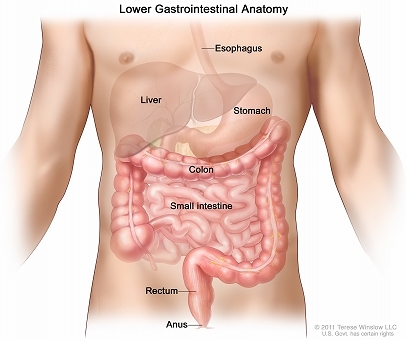
Did you know? Did you know that when the ‘cat is away the mice will play’? The average length of the entire human intestine can range from 7.5 to 8.5 meters (25 to 28 feet) with a surface area over ten times greater than the skin surface, all of which is supposed to be TEEMING with BILLIONS of beneficial micro flora collectively called “probiotics”. These symbionts are responsible for keeping the surface areas of our intestines occupied so that nothing unwanted can come, take root and flourish.
When we drink alcohol or take drugs (especially antibiotics) of any kind these beneficial bacteria are wiped out and thus a huge range of molecular compounds they were supposed to produce for us don’t get made and the territory is left unguarded and vulnerable to infestation. ANTIbiotics are, after all, the antithesis of PRObiotics!
It’s also very important to understand that both beneficial "friendly" and harmful "unfriendly" micro organisms inhabit the human intestinal tract simultaneously. They enjoy a complex symbiotic relationship with each other. In fact, in many cases each contributes to the overall function and health of the intestinal tract, while keeping the other in check at the same time.
Of course, when under undisturbed conditions, the balance of "friendly" micro organisms to "unfriendly" micro organisms remains remarkably stable. Intestinal function runs smoothly, with digestion and metabolism operating at peak levels, providing essential enzymes, nutrients and chemicals to the rest of the body.
So when this balance in the intestinal tract is maintained healthful conditions prevail. It is only when the ecology of the gastrointestinal tract becomes disturbed or otherwise altered that the balance of friendly/unfriendly micro organisms becomes disrupted, and then serious health problems often occur. Most common causes of these disturbances are antibiotic usage, excessive sugar or alcohol consumption, stress and even drinking chlorinated or fluorinated water.
When the ecological balance of the human gastrointestinal tract becomes disrupted, beneficial micro organisms can no longer flourish in required numbers to hold the harmful ones in check. What's more, malicious toxin producing bacteria and fungi begin to take over, further threatening the ecology of the gastrointestinal tract.
Any diet high in red meats, concentrated proteins or rich, fatty foods will dramatically alter the acid/alkaline balance of the intestines, leading to the overgrowth of the disease causing, putrefactive bacteria that eventually will overcome the beneficial bacteria and open the door to a host of serious health problems.
Furthermore, colonies of putrefactive bacteria often discharge highly toxic by-products while reacting with foods in the digestive tract. This reaction could further upset the ecology of the gastrointestinal tract and slowly poison the bloodstream and subsequently the entire body. The end result is the onset of chronic degenerative diseases.
In the following video Fred explains why not to snack on nuts in general, and why to eat only almonds if you eat nuts. Fred explains the acid and alkaline effects that eating nuts have and thus why to avoid all but the almond. Fred also explains why women want to be careful to not overuse soy milk. This is excerpted from Fred Busch's Famous Food Talk in South Beach.
Almonds are nutrient-dense (eat small quantities only), moderately alkaline-forming nuts. They provide more calcium than any other nut, and this high calcium content coupled with high magnesium content is what makes almonds alkaline-forming. Because almonds are about 60 percent fat, they’re also high in calories; a 1 oz. serving contains just over 170 calories, of which 102 calories are from heart-healthy polyunsaturated and monounsaturated fat. Almonds are an excellent source of protein, potassium, iron, zinc and vitamin E, and a good source of antioxidant flavonoids. Almonds also help reduce LDL cholesterol levels and offer protection against heart disease, but please always eat them raw and only in moderation.
Cautionary note: Nuts rich in asparagine, such as almonds, have the potential to harm your health and fitness when roasted. Sticking to raw nuts remains the safest method to avoid such problems.
In the video below Fred Busch of the American Nutrition Institute (ANI) discusses some of the reasons to use probiotics in a regimen of intelligent living. Many people have intestinal ailments and malfunctions and could benefit from the use of probiotic friendly bacteria, microflora, along with a program of eliminating junk food and beginning to exercise.
Probiotic bacterial cultures are intended to assist the body's naturally occurring gut flora (an ecology of microbes) to re-establish themselves. They are sometimes recommended by doctors, and, more frequently, by nutritionists, following a cleanse, after a course of antibiotics, or as part of the treatment for gut related candidiasis.
Probiotics Offer the Following Health Benefits:
• Promote healthy digestion and nutrient assimilation.
• Replenish colonies of friendly bacteria that may be destroyed by antibiotics and certain health complications.
• Counter an overgrowth of "bad" organisms in the gastrointestinal tract.
• Enhance immune response (since a large percentage of cells of the immune system are located in the digestive tract).
• May support healthy cholesterol levels.
• Promote oral health.
• Help counter an unfavorable balance of yeast and fungus.
• Assist those that are lactose intolerant with lactose digestion.
• Support urinary tract and colon health.
Why is Supplementing with Probiotics Important?
A number of factors, including poor diet, medication, illness, stress and aging, can deplete levels of beneficial bacteria in the body. That's why it is important to incorporate a good, high-quality probiotic supplement into your daily diet.
What to Look for in a Probiotic Supplement:
• Find a probiotic supplement that guarantees its potency (the promised level of live bacteria) at time of use.
• Make sure that it contains a high-quality prebiotic to nourish and sustain existing friendly bacterial colonies within the intestines.
• Only use a probiotic supplement containing naturally occurring strains that are safe and effective for human use and are not genetically engineered (non-GMO).
• Choose one that features a good delivery technology that enables these strains to securely arrive at their destination – the intestinal tract.
Here's more...
Cabbage can also be used as a homemade probiotic...
CABBAGE REJUVELAC:
Quote: "Cabbage is a vegetable that is teeming with lactobacteria. No starter is needed for making rejuvelac. Just start one morning by blending together 1 3/4 cups (420ml) distilled or purified water plus 3 cups (720mlcoarsely chopped, loosely packed fresh cabbage. Start the blender at low speed and then advance the blender to high speed and blend for 30 more seconds. Pour into a jar, cover, and let stand at room temperature for 3 days. At this time, strain off the liquid rejuvelac. The initial batch of cabbage rejuvelac takes 3 days to mature, but succeeding batches take 24 hours each. Each morning after straining off the fresh rejuvelac, blend together for 30 seconds at high speed 1 1/2 cups (360ml) distilled or purified water plus 3 cups (720ml) coarsely chopped, loosely packed fresh cabbage. Pour into a jar, add 1/4 cup (60ml) of the fresh rejuvelac just strained off, cover, shake and let stand at room temp. until the next morning. You can also make cabbage rejuvelac without a blender by chopping the cabbage very fine and using 2 1/2 cups (600ml) finely chopped, loosely packed cabbage listed above. The amount of distilled or purified water used should remain unchanged. Good quality rejuvelac tastes similar to a cross between carbonated water and the whey obtained when making yogurt. Bad quality rejuvelac has a much more putrid odor and taste and should not be consumed. Always avoid using tap water when making rejuvelac because chlorine has been added to it for the purpose of killing bacteria of any kind.
Drink each day's rejuvelac during the course of the day by taking 1/2 cup (120ml) 3x a day, preferably with meals."
...Robert Gray - "The Colon Health Handbook"
And this...
CULTURED CABBAGE JUICE
Quote: "To implant friendly lactobacteria in the colon and heal damaged mucus membranes of the G.I. tract, you need to drink about 1 and 1/2 cup daily of cultured cabbage juice. Here is how to make it. Fill blender with chopped green cabbage and add distilled water until about 2/3 full. (Do not use well water or tap water). Beat at high speed in the blender for one minute. Pour mixture into bowl and repeat with two more batches. Cover with Seran wrap or similar material and let stand at room temperature. After 3 days, the cabbage juice solution is ready to use. Strain the mixture to separate the liquid from the pulp. Place the cultured cabbage juice in refrigerator. Drink 1/2 cup of this solution diluted with an equal part of water 2 or 3 times each day. When your supply gets low, make second batch just like the first one, except, add 1/2 cup of the juice from the first batch to the second batch. Your second batch will be ready just 24 hours. This process may be repeated indefinitely. Each serving contains several billion friendly lactobacteria. The lactic acid in the culture cabbage juice will purify the G.I. tract and kill most strains of fungi, parasites and other pathogens. You should drink this mixture until your stools float in the toilet bowl and are odor free. When that happens, you may lower your dosage of cultured cabbage juice to one serving each day as maintenance dosage. You may eat one cup of raw cabbage as a substitute for 1/2 cup of cultured cabbage juice."
Conrad Lebeau - "Natural Remedies For Intestinal Health"


 Because almonds are about 60 percent fat, they’re also high in calories; a 1 oz. serving contains just over 170 calories, of which 102 calories are from heart-healthy polyunsaturated and monounsaturated fat. Almonds are an excellent source of protein, potassium, iron, zinc and vitamin E, and a good source of antioxidant flavonoids. Almonds also help reduce LDL cholesterol levels and offer protection against heart disease, but please always eat them raw and only in moderation.